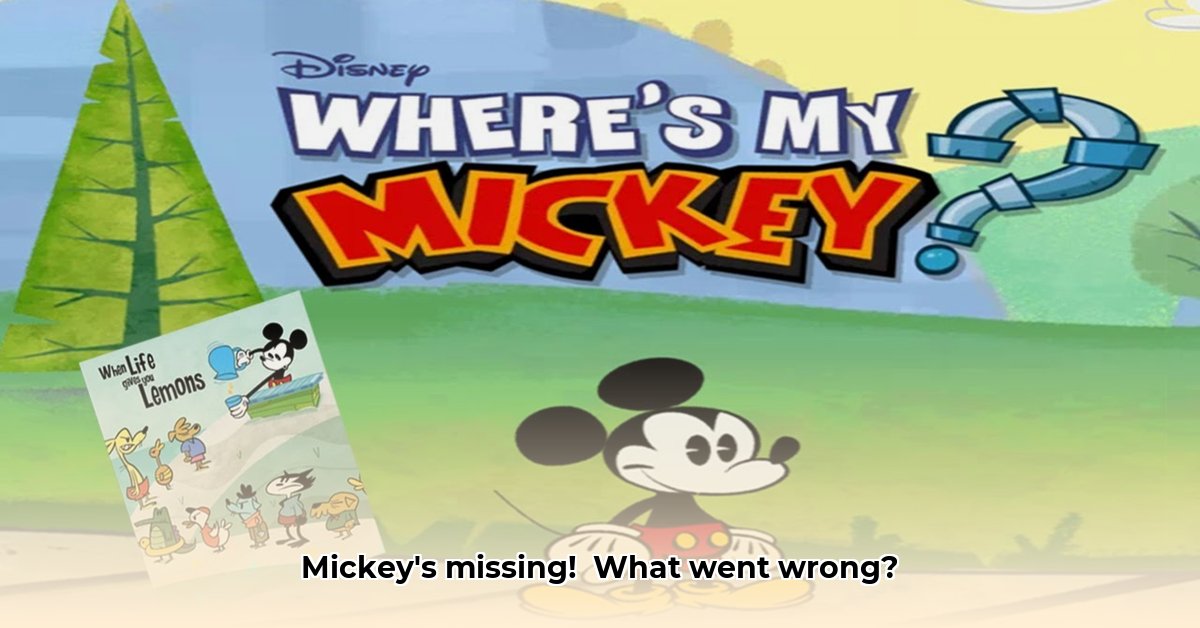
Where's My Mickey?: The Mystery of the Missing Mouse
Remember the charming physics-puzzle games where you guided liquids to a beloved cartoon character? Disney's Where's My Mickey (2013), a follow-up to the wildly successful Where's My Water, initially captivated players with its clever mechanics and familiar Disney charm. Instead of water, players manipulated a gooey substance to reach Mickey Mouse, aided by the antics of Goofy. Sandboxes added an extra layer of puzzle complexity. But by February 2018, the game vanished from app stores—a sudden disappearance that remains largely unexplained. Why did this seemingly promising game, featuring iconic characters and a proven gameplay formula, meet such an abrupt end? This case study delves into the mystery, exploring potential causes and extracting actionable intelligence for future game developers.
Did the game simply fail to generate sufficient revenue? Was a critical, unfixable bug the culprit? Or were there deeper, more complex reasons, perhaps involving internal conflicts or contractual issues that remain undisclosed? The most intriguing clue lies in player reports of an "Oops! An error occurred" message when attempting in-app purchases. This suggests systemic problems, extending beyond a simple game shutdown; it hints at deeper issues within the game's infrastructure, even after its official demise. This wasn't a quiet retirement; it was a sudden, unexplained vanishing act. This raises an important question: What lessons can game developers learn from this unexpected failure?
Unraveling the Puzzle: Why Mickey Disappeared
The lack of transparency surrounding Where's My Mickey?s sudden disappearance is striking. This isn't just about one game's failure. It’s a reminder of the precarious nature of success in the mobile gaming market, where even a major player like Disney cannot guarantee longevity. This raises critical questions: What contributed to the game's failure? What factors contributed to its downfall?
Several factors likely played a role. The game's unique “goo” mechanic, while inventive, might not have captured the same player engagement as the original Where's My Water's more familiar water puzzles. Did players fail to connect emotionally with the gooey substance in the same way they did with water? Another possibility involves market saturation. The mobile gaming landscape is incredibly competitive, with thousands of new games launching annually, and only a few achieving substantial success. It is also possible Disney shifted its focus and resources to other mobile gaming projects, leaving Where's My Mickey to quietly fade away. Finally, the reported issues with in-app purchases suggest that backend infrastructure issues and problems with monetization strategies may have played a significant part in the game's demise.
Lessons Learned: For Developers and Game History Buffs Alike
The story of Where's My Mickey? offers invaluable insights for both game developers and game historians. For developers, it emphasizes the importance of thorough market research, prudent risk management, and the need for a long-term vision. Extensive testing and marketing research are crucial before launch, ensuring that the game caters to player preferences and market demands. Diversification of app store distribution is also key—reliable backend infrastructure is equally paramount. The handling of in-app purchases needs to address potential future issues and complications, even if the game is eventually phased out and removed from app stores. For game historians, Where's My Mickey?s disappearance highlights the fragility of digital game preservation. The limited available information underscores the need for proactive efforts to preserve gaming history, including collecting gameplay footage, screenshots, and design documents before games are discontinued.
How to Prevent Mobile Game App Store Removal: Lessons from "Where's My Mickey?"
The case of Where's My Mickey? provides a compelling example of how data privacy issues can lead to app store removal. While the exact reasons for the game's disappearance aren't publicly known, issues related to data collection practices concerning PII and potential violations of COPPA (Children's Online Privacy Protection Act) are highly probable. This section offers a framework for developers to prevent similar situations.
Data Collection Practices and the Privacy Paradox
The game's data collection likely created a substantial privacy risk. Even if Disney offered opt-out options, their effectiveness is questionable, particularly for the target audience. This underscores the importance of transparent and parent-friendly data collection practices.
Strategies for Preventing App Store Removal
To avoid the fate of “Where’s My Mickey?”, developers should adopt the following strategies:
- Prioritize Privacy-by-Design: Integrate data privacy into the app’s foundational architecture. Minimize data collection from the start.
- Transparency is Paramount: Create user-friendly privacy policies that are easy for parents to understand. Avoid technical jargon.
- Streamlined Opt-Out: Make opting out of data collection effortless and immediately accessible. Don’t bury it within complicated menus.
- Data Minimization: Only gather data essential for app functionality.
- Data Anonymization: Apply techniques that safeguard children's identities.
- Regular Privacy Audits: Conduct frequent audits to detect and resolve vulnerabilities.
- Stay Informed: Keep abreast of evolving data privacy regulations.
A Proactive Approach: Key Steps for Developers
| Step | Description | Importance |
|---|---|---|
| Privacy Policy Review | Regularly review and update your privacy policy to reflect current data practices and legal standards. | Ensures compliance and demonstrates commitment to responsible data protection. |
| Data Minimization Plan | Develop a plan to reduce data collection, focusing only on what's essential for app functionality. | Less data collection significantly reduces privacy risks. |
| Transparency Initiatives | Implement clear and user-friendly interfaces for managing privacy settings and data collection. | Enhances user knowledge and control, reducing potential problems. |
| Regular Security Audits | Conduct frequent security audits to identify and address potential vulnerabilities that could expose user data. | Protects data from breaches and bolsters overall app security. |
| Compliance Monitoring | Continuously monitor regulatory standards and best practices in data privacy to maintain compliance. | Staying updated on changing regulations helps avoid non-compliance issues and potential app removal. |
This case study highlights the importance of comprehensive planning, robust risk management, and a proactive approach to data privacy in mobile game development. The unexpected disappearance of Where's My Mickey? serves as a cautionary tale, emphasizing the need for developers to prioritize these crucial aspects to ensure their games' long-term viability.
⭐⭐⭐⭐☆ (4.8)
Download via Link 1
Download via Link 2
Last updated: Friday, May 23, 2025